Navigating Growth: Using the PDCA Cycle to Improve Operations and Manage Demand in the Restaurant Industry

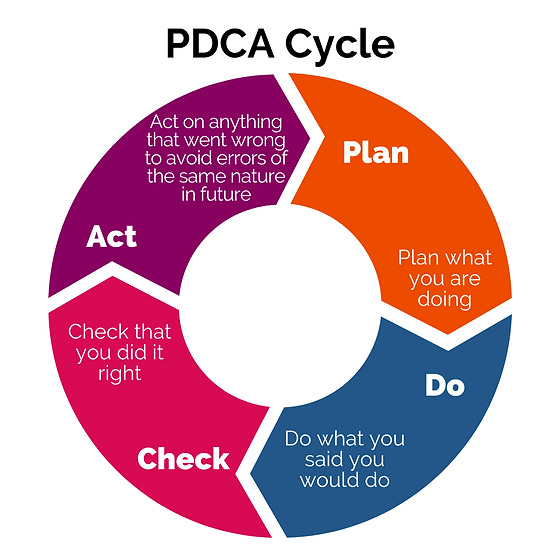
As a business owner, you know that scaling your operations can be a daunting task. When expanding your business, it's crucial to ensure that you maintain the quality and level of service that your customers have come to expect. However, without the proper tools and systems in place, it can be difficult to predict demand and manage resources effectively, leading to issues such as overstocking and stock-outs, low customer satisfaction, and inefficiency in operations. The PDCA cycle, also known as the Deming cycle, is a powerful tool that can help you improve your operations as you grow, by providing a systematic approach to identify and solve problems, optimize resources and forecast demand.
A practical example to illustrate this could be in the restaurant industry. For example, a restaurant owner is looking to open multiple locations. Using the PDCA cycle, they first analyze historical data on customer demand, such as menu items that are the most popular and busiest hours. They also evaluate inventory levels of food and beverage items, identifying any issues with overstocking or stock-outs.
Plan:
The restaurant owner develops a plan to optimize inventory levels and manage demand, forecasting future demand using statistical models or other techniques.
Do:
Implement the strategies developed in the plan
Check:
Monitor and track the performance of these changes, such as inventory levels, customer satisfaction, and sales data.
Act:
If the results show that inventory levels are stable and customer satisfaction is high, the restaurant owner continues to use this solution and monitor performance. If the results are not as expected, they analyze the situation, find the problem, and make necessary adjustments in the plan and act again.
By using the PDCA cycle, a restaurant owner can achieve a more predictive and prescriptive approach to planning, similar to how a GPS guides you to your destination. It helps to identify and solve problems in a systematic manner, leading to a more efficient and effective operation, especially when scaling the business.
 | A guest post by
|